How to Sell a House in Probate
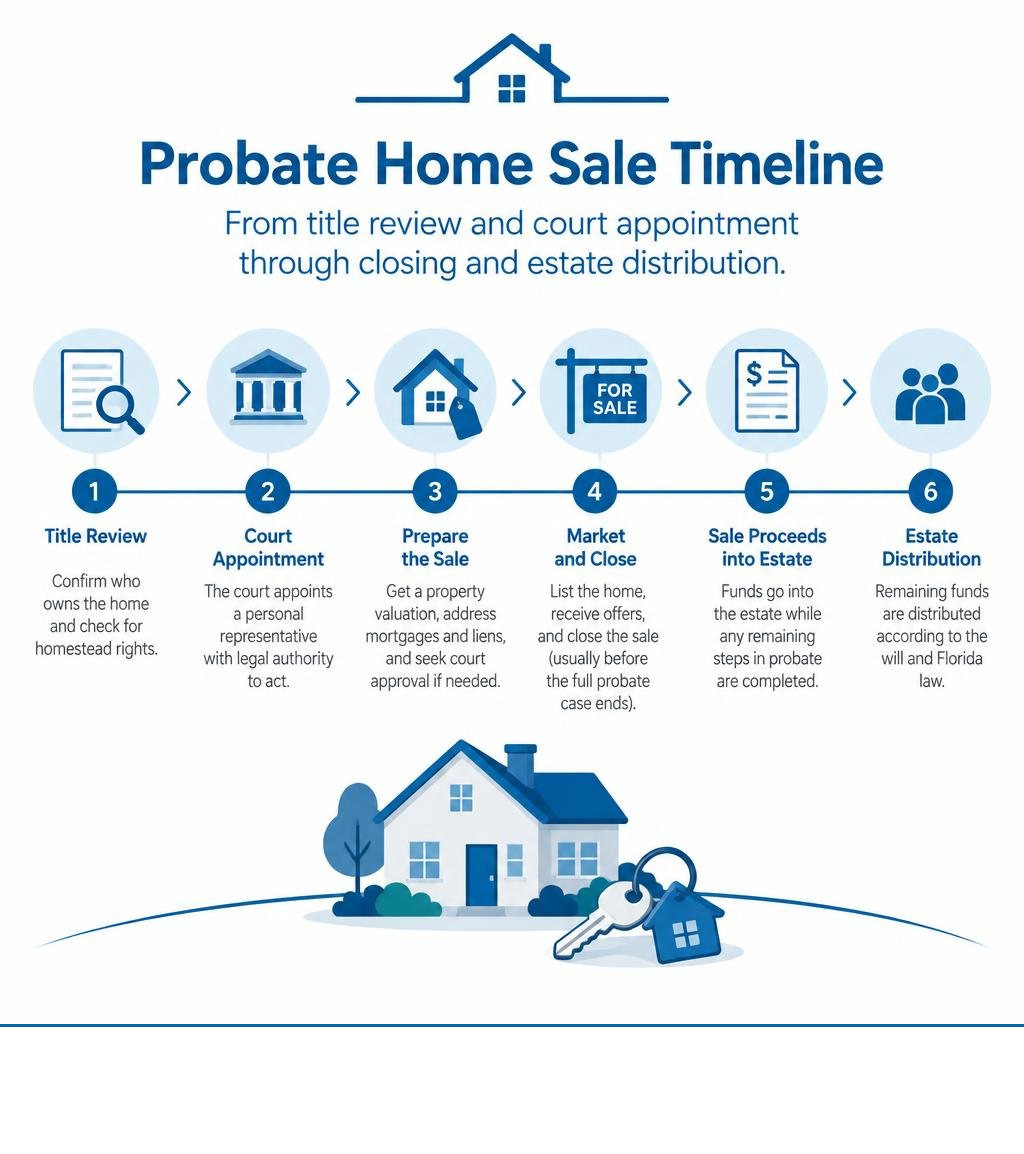
Selling a house in probate starts with checking who owns the home and who can sign for it. In Jacksonville, review the deed and any Florida homestead rights first. If the house is part of the estate, the court-appointed personal representative can then confirm their authority, get a property valuation, address mortgages and liens, and arrange a sale. Court approval may be needed, so check the requirements before signing a contract. The sale can often close before the entire probate case ends.
You can sell a probate home as-is, without making repairs first. But the mortgage, insurance, taxes, and upkeep still need attention while the sale is pending. Sale proceeds generally go into the estate before remaining funds are distributed.
I’m Nima Toghiyani, owner of Full Circle Homes in Jacksonville, with more than a decade of experience in real estate acquisitions and finance. My work with homeowners selling houses as-is, along with my background in mortgage support, helps me explain selling a house in probate in practical terms.
Legal Authority and When You Can Sell Estate Property
One of the most common misconceptions families have when handling an inherited property is believing that being named as the executor in a will immediately grants the power to sign a purchase contract. In reality, a last will and testament is simply an expression of the decedent’s wishes; it does not confer legal power on its own.
Until the probate court officially opens the estate and issues formal documentation, no individual has the legal authority to convey title. Attempting to sell real estate before receiving proper authority from the court creates severe title clouds, delays closing, and can expose you to personal liability. Understanding the nuances of selling a house during probate in Florida ensures that you avoid premature commitments that could derail your transaction.
Legal Authority and Power of Sale
To establish a clear chain of title, the probate court must appoint a personal representative (known as an executor when named in a will, or an administrator if the decedent died intestate without a will). The court confirms this role by issuing official documents known as Letters of Administration or Letters Testamentary.
Once appointed, the personal representative acts as a fiduciary. This means you have a legal obligation to manage estate assets prudently and in the best financial interest of the beneficiaries and valid creditors. When a will includes an explicit “power of sale” clause, it often allows the personal representative to list and sell real property without requiring a separate court hearing for permission. If the will lacks this provision—or if there is no will at all—the court retains tighter jurisdiction over the transaction.
Key Requirements Before Selling a House in Probate
Before you can place an inherited property on the market or finalize a contract, several legal prerequisites must be addressed:
- Estate Petition Filing: The initial petition to open probate must be filed with the local court (such as the Duval County probate court for Jacksonville properties).
- Issuance of Letters: You must have physical possession of certified Letters of Administration proving your appointment.
- Beneficiary Notification: All named beneficiaries and statutory heirs must receive formal notice of estate proceedings.
- Preliminary Title Examination: A title company or attorney must examine public records to identify any outstanding liens, municipal violations, or unpaid property taxes that could cloud title transfer.
- Homestead Determination: In Florida, primary residences often qualify for protected homestead status, which transfers title directly to qualifying heirs outside of standard estate claims, changing how the property must be conveyed.
Independent vs. Supervised Estate Administration
The level of court oversight directly governs how freely a personal representative can manage and sell real estate. Depending on state statutes and the terms of the will, an estate is administered under either independent (unsupervised) administration or supervised (court-dependent) administration.
| Feature | Independent Administration | Supervised Administration |
|---|---|---|
| Court Intervention | Minimal; representative acts without routine hearings | High; court approval needed for key milestones |
| Power to Sell Real Estate | Can list, negotiate, and close directly if granted power | Must petition court for permission to list and sell |
| Sale Contract Approval | Does not require mandatory judicial confirmation | Requires formal court review and confirmation order |
| Average Timeline | Faster (often closes in weeks once letters issue) | Slower (adds petition, notice, and hearing cycles) |
| Administrative Cost | Lower legal fees and minimal court filings | Higher expenses due to recurring attorney appearances |
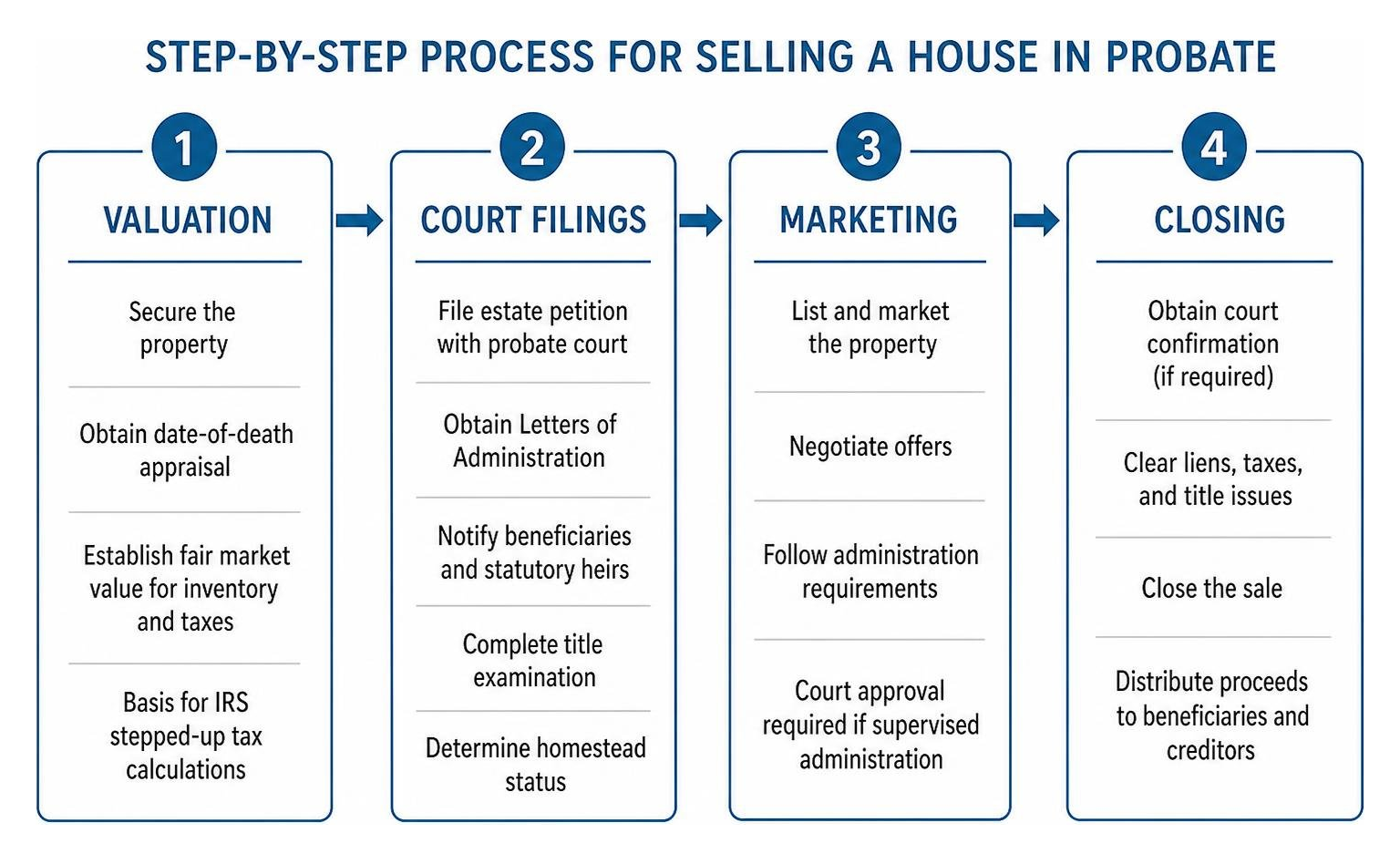
Step-by-Step Process for Selling a House in Probate
Selling real estate through an estate follows a structured sequence designed to protect the value of the property for all interested parties.

Property Securing and Date-of-Death Valuation
Immediately following appointment, your first practical step is securing the real estate. Change exterior locks, turn off unnecessary utilities while keeping climate control active to prevent mold, and notify the insurance carrier that the property is unoccupied to secure a vacant home policy endorsement.
Next, obtain a formal date-of-death appraisal from a certified, licensed appraiser. This valuation establishes the home’s fair market value for estate inventory filings, sets the baseline for local property tax adjustments, and creates the basis for IRS stepped-up tax calculations.
Court Filings, Notice of Proposed Action, and Overbidding
Depending on local jurisdiction and administration type, formal notifications must be delivered to interested parties before a sale contract becomes binding:
- Review Florida authority and notice requirements: Before a probate sale moves forward, the personal representative and estate attorney should confirm the authority granted by the court, the will, and Florida law. The required notices, filings, and approvals can vary with the estate and the property’s ownership status. See this overview of selling a house during probate in Florida.
- Obtain approval when the estate requires it: If court approval or beneficiary notice is required, the estate attorney can prepare the appropriate filing and guide the personal representative through the process before closing.
- Plan for objections or delays: Beneficiary objections, title issues, homestead questions, liens, or court scheduling can affect the timing of a probate sale. Addressing these Florida-specific issues early helps keep the transaction moving toward closing.
Closing, Lien Settlements, and Estate Account Deposits
Once all required notice periods expire or court orders are granted, the transaction proceeds to the closing table. The personal representative signs the closing paperwork on behalf of the estate.
The closing attorney or title agent manages the disbursement of funds according to statutory priority:
- Certified Letters of Administration
- Court Order Authorizing Sale (if supervised)
- Affidavit of No Florida Estate Tax Due (or federal tax clearance)
- Personal Representative’s Deed conveying title to the buyer
- Closing settlement statement detailing all payoffs
All net proceeds from the transaction must be deposited directly into a dedicated, interest-bearing estate checking account. These funds must remain untouched until creditor claim windows conclude and the court authorizes final distribution.
Costs, Timelines, and Mortgages During Estate Sales
Managing an estate sale requires realistic budgeting and timeline expectations. Unlike a standard retail transaction that can wrap up in 30 to 60 days, probate property transactions commonly span 9 to 24 months end-to-end when navigating full estate administration. Understanding how long probate takes helps personal representatives plan for carrying expenses like property taxes, HOA fees, and insurance premiums.
Handling Existing Mortgages, Property Liens, and As-Is Condition
A homeowner’s passing does not extinguish existing debt secured by real estate. Mortgages, home equity lines, and municipal code enforcement liens stay attached to the title.
- Mortgage Obligations: Monthly payments must remain current using liquid estate funds to prevent the lender from initiating foreclosure proceedings.
- Lender Communication: Personal representatives should notify the loan servicer promptly, providing the death certificate and Letters of Administration to request payoff statements.
- As-Is Selling Options: Most estate properties are sold as-is. Personal representatives generally have limited personal knowledge regarding historical home repairs or underlying defects, making as-is contracts the safest mechanism to eliminate post-sale seller liability while avoiding out-of-pocket repair costs for the estate.
Breakdown of Court Costs, Attorney Fees, and Timeframes
Total administrative expenses for settling an estate commonly range from 3% to 7% of the gross estate value. Standard expenditures encountered when selling real estate include:
- Court Filing Fees: Initial probate filing and motion fees generally range from $300 to $1,200 depending on the county.
- Date-of-Death Appraisals: Professional appraisals by certified real estate appraisers run between $400 and $800.
- Statutory Legal Fees: Attorney fees vary widely; some states establish statutory fee schedules based on gross estate value, while others bill hourly rates from $250 to $600 per hour.
- Publication Notices: Publishing notices to creditors in local newspapers as required by probate statutes runs roughly $150 to $300.
- Creditor Waiting Periods: In many jurisdictions, unknown creditors are given a statutory window (often three to six months from the first publication date) to file formal claims against estate proceeds before funds can be distributed to heirs.
Selling a Probate Home As-Is
For a probate property in Northeast Florida, an as-is cash sale can help personal representatives avoid repairs, staging, and financing-related delays while they work around estate requirements.
Jacksonville families can explore selling an inherited home fast in Jacksonville for an as-is, no-repair sale with a flexible closing timeline.
Frequently Asked Questions About Estate Property Sales
Do All Heirs Have to Agree to Sell Property in Probate?
Not necessarily. The court-appointed personal representative holds the legal authority to manage and dispose of estate assets in accordance with the will or statutory distribution laws. However, if heirs disagree regarding whether to sell the property or dispute the proposed sale price, they can file formal objections with the probate court. In contentious situations without consensus, an heir may petition the court for a partition action, prompting judicial oversight to divide the asset or compel a supervised sale.
What Is the Minimum Overbid Formula in Court-Confirmed Sales?
In jurisdictions that require court confirmation hearings with open bidding, the court sets a minimum first overbid formula to ensure subsequent offers justify reopening negotiations. A common statutory calculation establishes the minimum first overbid as 10% of the first $10,000 of the original accepted bid, plus 5% of the remaining balance. For example, on a $500,000 accepted offer:
- 10% of the first $10,000 = $1,000
- 5% of the remaining $490,000 = $24,500
- Minimum required overbid increase = $25,500
- New minimum bid in court = $525,500
Prospective overbidders must typically present a certified cashier’s check for a 10% deposit at the hearing to qualify.
What Happens to Sale Proceeds After Closing?
Net sale proceeds are never paid directly to individual heirs at the closing table. Instead, the closing title company issues a check payable directly to the estate, which the personal representative deposits into the designated estate checking account.
These funds remain in escrow within the estate account while the personal representative resolves outstanding administration expenses, attorney fees, funeral costs, valid creditor claims, and estate taxes. Only after all valid liabilities are resolved and the probate court approves the final accounting are the remaining funds distributed to the rightful beneficiaries.
Conclusion
Managing the estate of a loved one involves significant emotional and administrative responsibilities. From obtaining Letters of Administration and managing property upkeep to settling outstanding liens and distributing proceeds, following the proper legal roadmap protects you from personal liability and ensures the estate is settled smoothly.
When you need a straightforward path to liquidate an inherited property without the stress of repairs, staging, or financing contingencies, we are here to help. As a family-owned business based in Jacksonville, Full Circle Homes works directly with personal representatives and heirs across Northeast Florida—including Jacksonville Beach, St. Augustine, Orange Park, and surrounding communities—to provide fair, commission-free cash offers with flexible closing dates tailored to your probate timeline.
Explore our as-is home-selling options to discover how simple selling an inherited home can be.