How to Sell a House As-Is in Florida
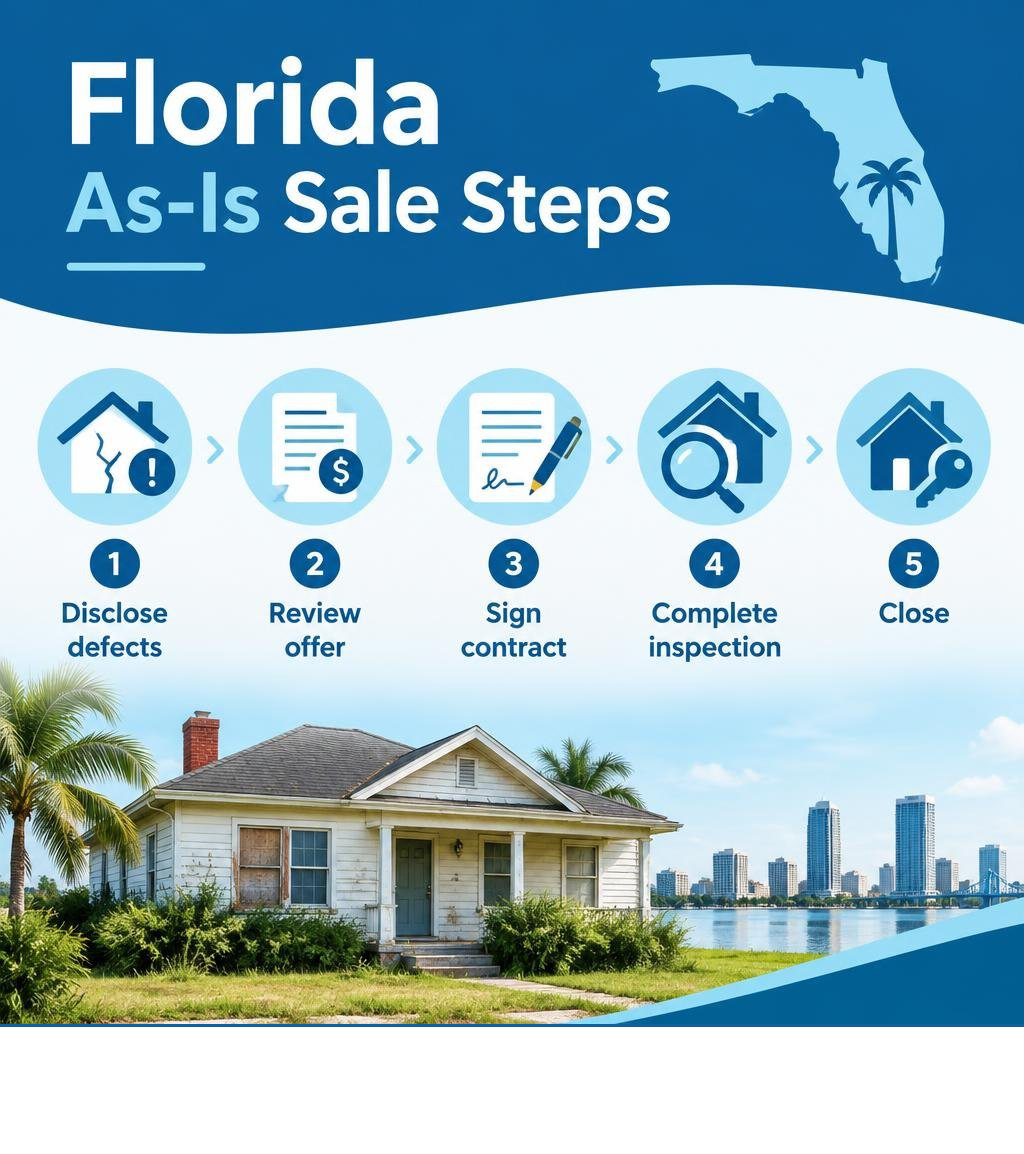
To sell a house as-is in Florida, disclose known defects, set a price that reflects the home’s condition, check that the buyer can pay, and put the inspection and closing terms in writing. You can sell without making repairs, but “as-is” does not let you hide problems that could affect the home’s value.
If you need to sell a distressed Jacksonville property quickly, a cash sale may help you avoid mortgage delays and choose a closing date that works for you. First, make sure you understand the offer, the buyer’s inspection rights, and what you will receive at closing.
What It Legally Means to Sell a House As-Is in Florida
Selling a property as-is means you offer the real estate in its current physical state, with no obligation to spend money on updates, structural repairs, or cosmetic touch-ups before closing. It does not, however, give a seller a free pass to conceal property defects or mislead prospective buyers.
Under Florida common law, property sales are guided by the landmark Florida Supreme Court ruling in Johnson v. Davis (1985). This decision established that where the seller of a home knows of facts materially affecting the value of the property which are not readily observable and are not known to the buyer, the seller is under a duty to disclose them to the buyer. This legal standard applies to all residential sales across the state, including an as-is transaction.
Furthermore, Florida Statute 475.278 reinforces honesty and fair dealing in real estate transactions. While an as-is clause protects you from being forced to fix broken air conditioning units or patch aging roofs, it never shields you against claims of fraudulent nondisclosure or active concealment.
How the FAR/BAR Contract Works When You Sell House As Is Florida
When you navigate an as-is transaction in our state, the paperwork used is almost always the standard “AS IS” Residential Contract for Sale and Purchase, jointly approved by the Florida Realtors and The Florida Bar (commonly referred to as the FAR/BAR AS-IS contract).
The contract sets the framework for the entire sale:
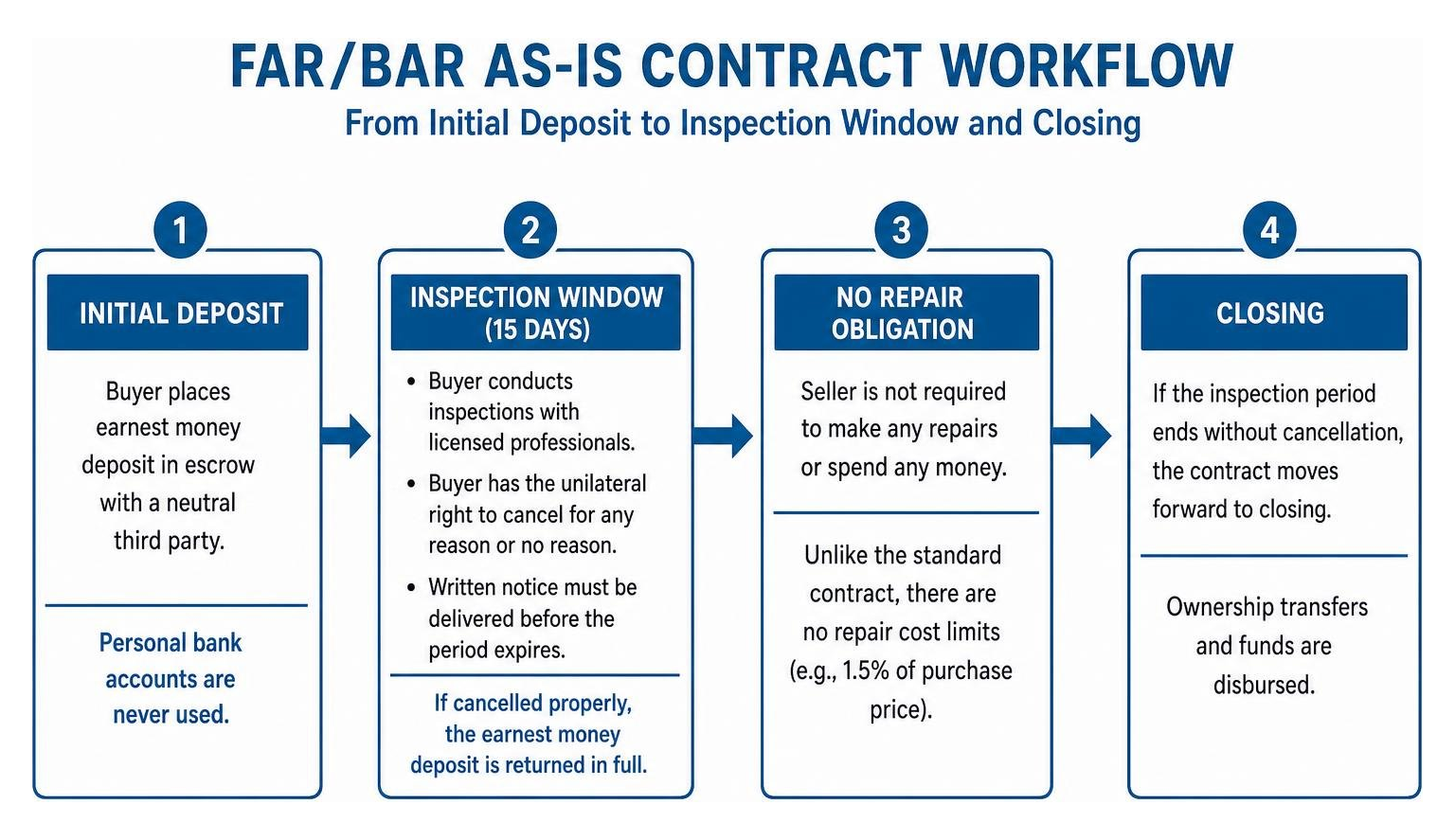
- Inspection Period: By default, the FAR/BAR AS-IS contract gives the buyer a 15-day inspection period (though this timeline can be negotiated up or down). During this window, the buyer can bring in licensed home inspectors, general contractors, or structural engineers to evaluate the premises.
- Buyer Cancellation Rights: During the inspection window, the buyer has the unilateral right to cancel the contract for any reason or no reason at all, provided they deliver written notice before the period expires. If cancelled properly, their earnest money deposit is returned in full.
- No Mandatory Repair Obligations: Unlike the standard FAR/BAR contract—which includes repair cost limits (often 1.5% of the purchase price for general repairs, wood-destroying organisms, and permit issues)—the AS-IS version explicitly states that the seller is not required to spend a single dollar on repairs.
- Earnest Money Escrow: The buyer places an earnest money deposit into an escrow account held by a neutral third party, such as a title company or real estate attorney. Personal bank accounts should never be used for holding buyer deposits.
Mandatory Seller Disclosure Requirements for As-Is Sales
To ensure compliance with Florida law, you should document every known issue using a formal Seller’s Property Disclosure statement. Even if you’re offering classic historic properties, clear documentation prevents post-closing disputes.
Key items that must be disclosed include:
- Roof Condition and Leaks: Known past or active water intrusion, missing shingles, or the estimated age of the roof covering.
- Structural and Foundation Issues: Settling, cracked slabs, compromised load-bearing walls, or past sinkhole activity.
- Plumbing and Electrical Systems: Outdated wiring (such as knob-and-tube or aluminum wiring), deteriorating cast-iron pipes, or persistent drain backups.
- Water Damage and Mold: Prior flooding, hurricane damage, or microbial growth that has not been professionally remediated.
- Unpermitted Additions and Renovations: Any garage conversions, enclosed porches, or electrical rewiring performed without required municipal permits.
- Environmental Hazards: Federal law mandates disclosure of known lead-based paint for homes built before 1978.
Navigating Unpermitted Work, Code Violations, and Financing Hurdles
Distressed properties across Northeast Florida—from historic bungalows in Jacksonville and Neptune Beach to older residences in Orange Park and Fleming Island—frequently carry hidden municipal complications. Code compliance issues, open building permits, and unpermitted modifications present significant challenges during traditional sales.
When planning your exit, it also pays to consider local seasonal market trends in Northeast Florida to understand buyer demand and timing dynamics in your specific county.
Handling Unpermitted Additions and After-the-Fact Permits
It is completely legal to sell a home with unpermitted work in Florida, provided that the unpermitted status is disclosed in writing to the buyer. However, municipal building departments treat unpermitted construction seriously, and rectifying it after the fact can be costly.
Homeowners dealing with unpermitted work generally face two practical routes:
- Obtain After-the-Fact (Retroactive) Permits: This involves hiring a licensed contractor or architect, submitting architectural drawings to the local building department, paying standard permit fees alongside late fines (often double the standard permit cost), and undergoing city inspections. The permit application fees alone typically run between $1,000 and $5,000. If an inspector finds that plumbing, framing, or electrical work fails current building codes, required corrections can run anywhere from $10,000 to over $50,000. The process typically takes 4 to 8 weeks.
- Disclose and Price It In for an As-Is Sale: For clean, well-built unpermitted spaces (like a finished sunroom), market discounts of 3% to 8% compared to permitted comps are common. For complex structural alterations or major code violations, pricing discounts often range from 10% to 15%. When homes are sold directly to cash buyers or investors due to significant unpermitted work, discounts of 15% to 25% allow the buyer to absorb the legal and construction risks.
Financing Barriers and 4-Point Insurance Challenges
Traditional retail buyers rely on conventional, FHA, or VA mortgages. These loans carry strict appraisal and property condition guidelines. If a home is distressed, the mortgage underwriting process often breaks down:
- Appraisal Shortfalls: Appraisers may exclude unpermitted square footage from their valuation, resulting in a lower appraisal that prevents loan approval.
- FHA and VA Property Standards: Government-backed loans require properties to be safe, sound, and secure. Peeling paint, missing flooring, damaged subfloors, or roof damage will trigger mandatory repair requirements before funding.
- The 4-Point Inspection Problem: In Florida, insurance carriers typically require a 4-point inspection (evaluating the roof, electrical, plumbing, and HVAC systems) for any home over 25 years old. If a roof has less than 3 to 5 years of remaining life, or if the home has polybutylene plumbing or outdated electrical panels, insurers will refuse to issue a policy. Without property insurance, no mortgage lender will fund the loan.
Main Strategy to Sell a Distressed Home As-Is in Florida: Direct Cash Sale
When repairs are financially out of reach or property issues make mortgage underwriting impossible, selling directly to a cash buyer offers an efficient solution. As a family-owned cash home buyer based in Jacksonville, we purchase residential properties in their true as-is condition throughout Atlantic Beach, St. Augustine, Middleburg, and surrounding areas. We eliminate traditional sales friction by working directly with homeowners without real estate commissions or mandatory repair lists.
Steps to Sell House As Is Florida Through a Direct Cash Sale
Selling to a cash buyer streamlines the transaction into straightforward steps:
- Request a Property Review: Provide basic property details, noting any known structural needs, roof ages, or municipal code items.
- Review Proof of Funds: A legitimate cash purchaser provides verified proof of funds from a recognized financial institution, confirming they have the capital ready without needing lender approval.
- Execute an As-Is Agreement: The terms are clearly defined, outlining a commission-free sale with no financing or appraisal contingencies.
- Conduct a Quick Title Search: A licensed title company or closing attorney verifies that title is marketable and prepares closing documents.
- Flexible Closing: You pick a closing date that suits your moving schedule, often completed in as few as 7 to 14 business days.
Key Pitfalls to Avoid in an As-Is Florida Property Sale

Selling an as-is home without proper precautions can lead to lost time, canceled contracts, or post-sale legal exposure. Keep these critical pitfalls in mind:
- Failing to Disclose Latent Defects: Trying to hide known issues violates Florida legal standards and leaves you vulnerable to lawsuits long after closing.
- Relying on Verbal Agreements: Every detail regarding price, timelines, and included items must be explicitly written into the contract. Verbal promises hold no legal standing in Florida real estate transactions.
- Accepting Unverified Offers: Always verify that a buyer using financing is pre-approved (not just pre-qualified), or ensure a cash buyer provides an up-to-date proof of funds statement.
- Overlooking Open Liens or Code Violations: Municipal code enforcement fines accumulate daily. Running a preliminary title and lien search early prevents unexpected surprises at the closing table.
Frequently Asked Questions about Selling As-Is in Florida
Do I need a real estate attorney to sell my house as-is in Florida?
Florida law does not legally mandate hiring an attorney to sell residential property. However, working with a real estate attorney or a reputable title company ensures your purchase contract, statutory disclosures, and closing statements comply with state regulations. For FSBO (For Sale By Owner) sellers, legal oversight provides valuable protection against contractual errors.
What is the realistic timeline for an as-is home sale in Florida?
A cash sale can close in as little as 7 to 14 days since it bypasses mortgage underwriting, formal bank appraisals, and mandatory insurance inspections. In contrast, selling an as-is home to a financed buyer on the open market typically takes 45 to 60 days, with the constant risk that loan underwriters may reject the property condition midway through the process.
Can a buyer cancel the contract during the as-is inspection period?
Yes. Under the standard FAR/BAR AS-IS contract, the buyer has the unilateral right to cancel the agreement for any reason during the agreed-upon inspection period. As long as they provide written notice before the inspection deadline expires, their earnest money deposit is returned in full without penalty.
Conclusion
Selling a distressed property in Florida does not have to be an overwhelming process filled with expensive repair bills and endless contractor estimates. By understanding your disclosure obligations under Florida law, accurately assessing unpermitted work, and understanding how property conditions impact traditional mortgages, you can select the right strategy for your home.
If you want to bypass contractor headaches, skip open houses, and avoid agent commissions, request a direct cash offer on your Florida property from our team. We handle the hard work directly so you can move forward on your own terms.